
Space of Mental recovery
by Oleksandra Stryzhevska
Professional care for your mental health during crises, anxiety, and burnout.

What I work with


Check your mental state
These short tests are clinical tools used in international medical practice for screening depression (PHQ-9) and anxiety (GAD-7). They can be used for self-diagnosis for an initial assessment of your condition.
Test results are not a diagnosis and do not substitute for a specialist's consultation.
Format of the consultation


About me
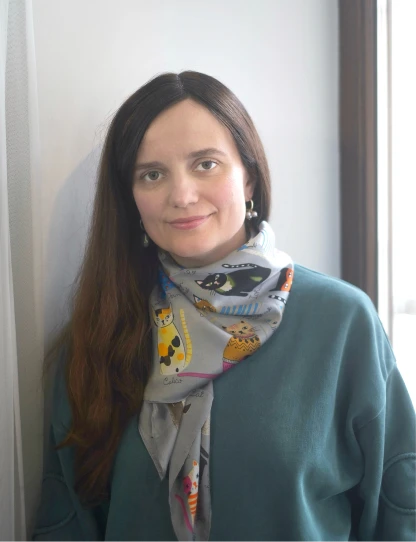
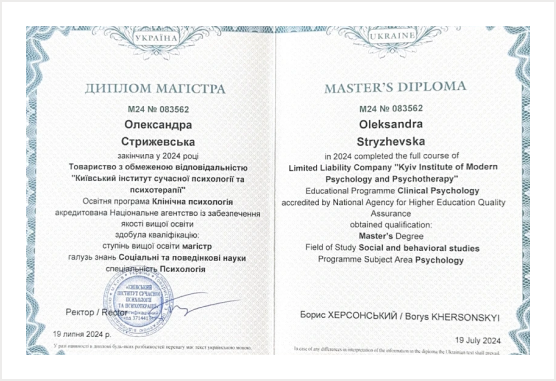
Greetings! My name is Oleksandra. I have a higher medical education as a family doctor, as well as a Master of Science (MSc) degree in Clinical Psychology. This allows me to see a person holistically — through the lens of the close interconnection between bodily processes and the psyche.
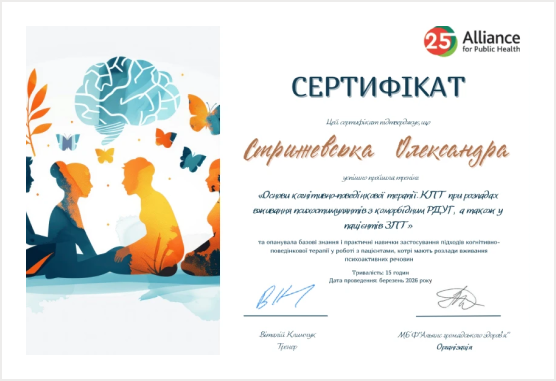
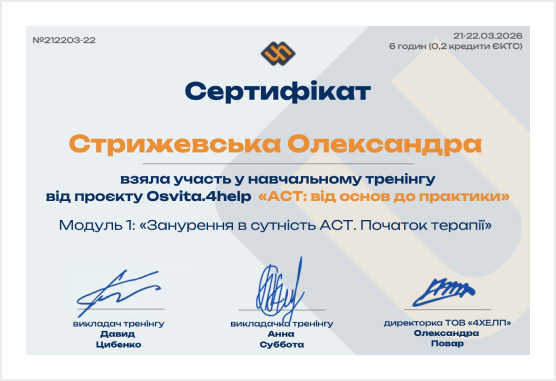
In my private practice, I combine a humanistic approach, Acceptance and Commitment Therapy (ACT), and Cognitive Behavioral Therapy (CBT) tools. This combination allows for focused work on problems while also going deep.
My goal is to create a safe space for you to integrate difficult experiences and restore your mental health, based on evidence-based practices.
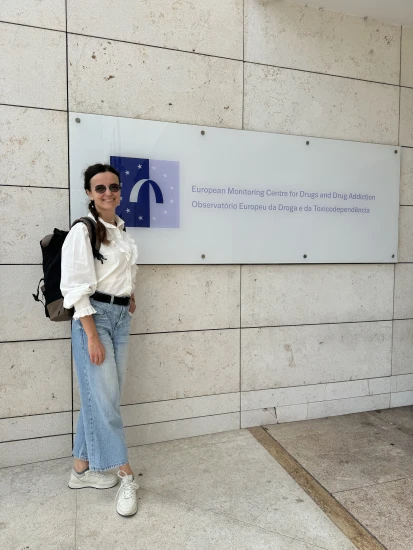
Additionally, I have many years of experience in public health, particularly with UN agencies, as a consultant for mental health projects and an expert in working with key populations.
This experience taught me to combine structure with a culturally sensitive approach and support that is completely free from prejudice and stigma.
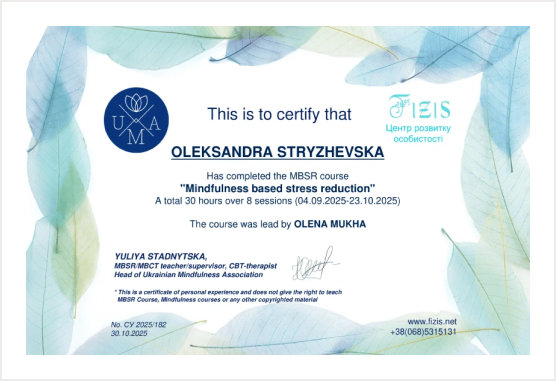
I practice yoga for many years.
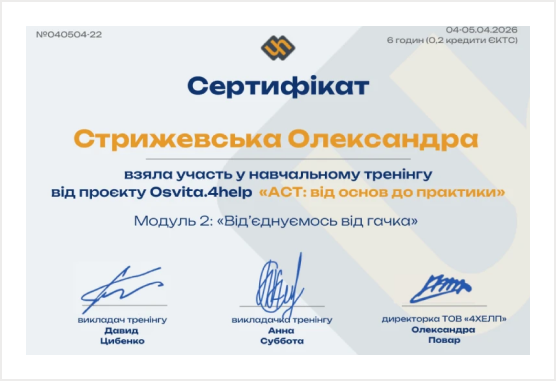
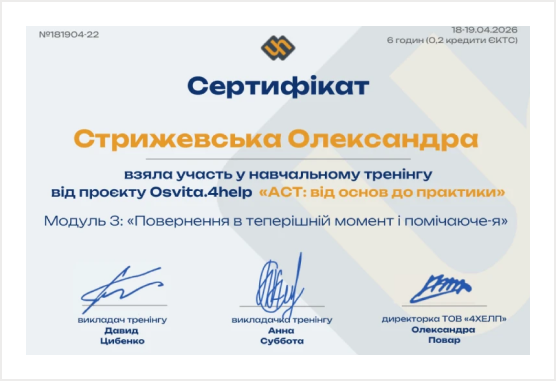
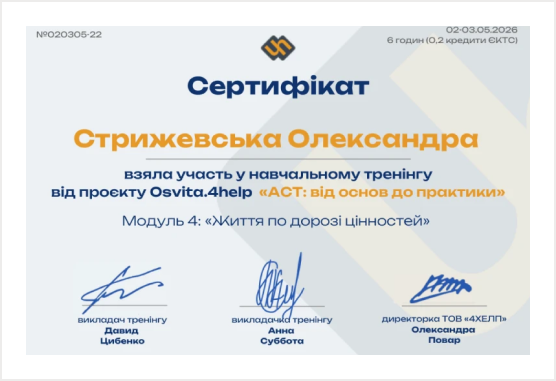
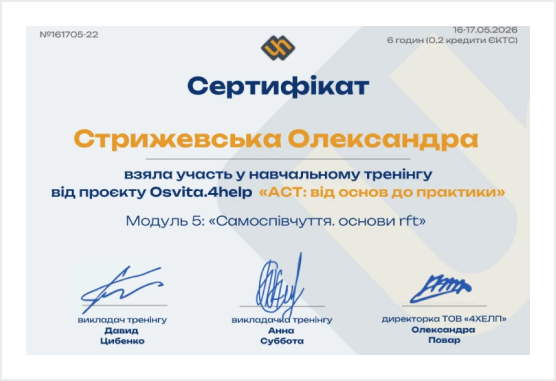
Education and qualifications

Why Kintsugi
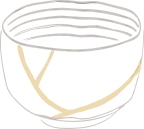
Kintsugi (Japanese: 金継ぎ — ‘golden joining’) is a traditional Japanese art of restoring broken ceramics, in which cracks are mended with gold paste, turning them into the most beautiful part of the piece.
This philosophy of valuing experience underpins my work as a mental health professional and formed the basis for the name of this online space.
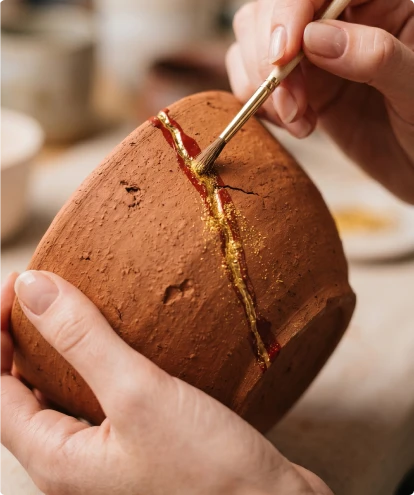
I see human crises and trauma not as defects to be erased, but as part of an individual's journey.
Together, we will work to carefully integrate each difficult experience, restore your mental health and physical resources, and help you regain wholeness and a life filled with meaning.
Frequently Asked Questions
Before the first meeting, clients usually have questions – I've gathered the answers to the most common ones here.
If you haven't found the answer to your question, message me on Instagram or use the appointment form – I'll answer personally.
contact meHow do the sessions work and how long does one meeting last?
Each individual session lasts 50 minutes and is conducted confidentially online (via Zoom).
Is it mandatory to have a clearly formulated request before the first meeting?
No, that's not necessary. People often seek help when they are in a state of apathy, burnout, or confusion. In the first session, we will untangle this knot of feelings together to understand what exactly is bothering you and where we will go from here.
How many consultations will I need for initial results?
The process of restoring and developing neuroplasticity requires time. For short-term requests (crisis support, acute anxiety) it may take 5-10 sessions.
How does the combination of medicine and psychotherapy help in work?
The mind and body are inextricably linked. Through my medical education, I have a strong understanding of nervous system physiology, the neurobiology of stress, and the impact of various illnesses on the human psyche. This allows me to see the complete picture and provide relevant recommendations.
Do you prescribe medication?
I do not prescribe medication during sessions. However, my medical background allows me to notice promptly if the nervous system requires pharmacological support. In such cases, I can recommend trusted psychiatrist colleagues for further assistance.
Is your approach adapted to the specific needs of adults with ADHD and ASD?
Yes, this is one of the focal points of my practice.
Do you work with children and teenagers?
I work with teenagers from the age of 16.